
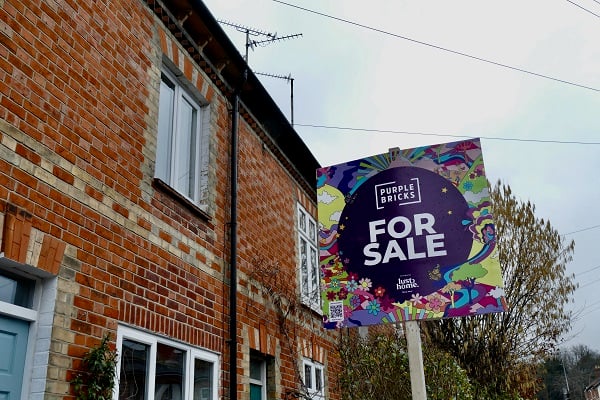
Almost half of homes put up for sale in Britain over the past three years failed to find a buyer, as higher mortgage rates and inflated seller expectations froze parts of the housing market.
Research by Zoopla found that 44pc of homeowners who listed their properties were ultimately unable to secure a sale.
The property website said many sellers were still struggling to adjust to a slower and more price-sensitive market after the post-pandemic housing boom faded.
Among sellers whose homes failed to sell, more than a third admitted they had initially overpriced their property despite believing their asking price was reasonable at the time.
Even among successful sellers, more than half were eventually forced to cut prices in order to attract buyers.
Zoopla’s own market data showed homes sold for an average of 3.5pc below asking price during the first quarter of 2026 — equivalent to roughly £18,800 being wiped off advertised values.
The findings underline the growing strain facing Britain’s housing market as elevated borrowing costs and economic uncertainty continue to erode affordability.
Richard Donnell said many homeowners had become detached from current market realities after years of rapid price growth.
“The average homeowner selling in 2025 had been in their home for nine years, meaning many owners are out of touch with what their home may be worth,” he said.
The survey, conducted among more than 2,000 recent sellers, also highlighted how emotional decision-making was distorting pricing expectations.
More than six in 10 sellers viewed potential new homes before obtaining a valuation for their existing property, while nearly a third made offers on another property before knowing what their own home was realistically worth.
As a result, around one in five admitted that they based their asking price on how much they needed to fund their next purchase rather than on the property’s actual market value.
Estate agents warned sellers ignoring market signals risked becoming trapped in stagnant listings.
Mark Manning said homeowners needed to respond quickly when viewings failed to convert into offers.
“If viewings aren’t converting, don’t ignore the signals,” he said.
“The sellers who struggle are almost always the ones who simply wait and hope something changes.”
The tougher conditions reflect the dramatic reversal from the pandemic-era property boom, when ultra-low interest rates and surging demand allowed many sellers to command record prices.
David Fell said sharply higher mortgage rates had transformed the market.
“In the aftermath of the pandemic, many sellers were virtually able to name their price, but higher interest rates have turned the chance of selling into a coin toss in many markets today,” he said.
He added that many homeowners who bought near the peak of the market were reluctant to accept lower prices and often chose to withdraw properties instead.
“If buyers aren’t willing to meet their price expectations today, sellers are likely to withdraw, sit tight, and try again in a few years’ time,” he said.
The figures come amid wider concerns over the health of Britain’s housing market as rising living costs, stubborn inflation and geopolitical uncertainty continue to weigh on consumer confidence.




Leave a Comment