
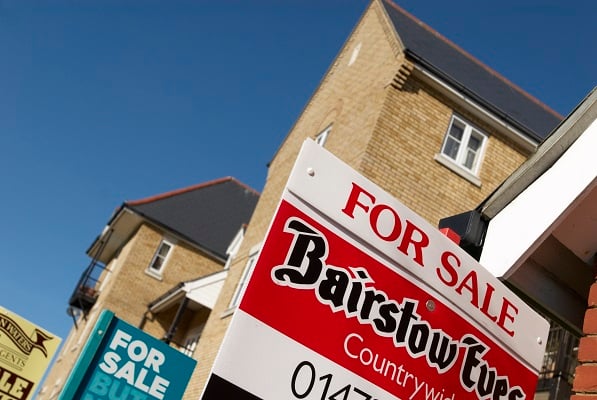
The latest internal data analysis from House Buyer Bureau has found that just two regions, London and the South East, are currently seeing seller expectations align with market reality, whilst the rest of the country continues to price above market value, contributing to slower sales and ongoing market friction.
House Buyer Bureau analysed its own internal data alongside wider average price data, comparing seller-stated property values against estimated average market values across England, based on homes entering the quick sale market.
The analysis shows that, in London, sellers priced their homes at an average of £447,692 compared to an estimated wider market value of £560,889, a difference of -£113,197.
The South East also saw a relatively narrow gap, with seller expectations sitting just -£6,977 below market value.
In contrast, sellers across the rest of the country are largely setting expectations above market value.
The South West sees one of the largest gaps in perceived value at +£45,086, followed by Yorkshire and the Humber (+£33,459), the North West (+£26,632) and the East Midlands (+£26,262).
This regional divide highlights a market where inconsistent pricing remains a key issue, with many sellers still struggling to align with current buyer expectations.
Managing Director of House Buyer Bureau, Chris Hodgkinson, said: “One of the biggest challenges in the current market is that pricing behaviour is being shaped very differently depending on where you are in the country.
In London and the South East, where values had already climbed to very elevated levels, sellers have been among the hardest hit by the shift in market conditions. As a result, many are reacting decisively, often shaving significant value off their expectations in order to secure a sale, sometimes more than is strictly necessary.
Elsewhere across the country, however, the picture is very different. In many regions, sellers are still coming to market with expectations that sit above where buyers are willing to transact, which is creating a clear disconnect between pricing and demand.
In both cases, the outcome is the same. When pricing isn’t aligned with market reality, it reduces buyer interest, slows negotiations, and increases the likelihood of delays or a failed sale.
For many sellers, this only becomes clear after weeks or months on the market, by which point they’ve already lost valuable time and, in some cases, money.
That’s why we’re continuing to see a growing number of sellers opt for quicker, more certain routes to sale, particularly those who either need to move quickly or have already experienced the frustration of a sale that hasn’t gone to plan.”


Leave a Comment