
Anyone who has spent an evening on Rightmove knows the routine: pick a postcode, set a bedroom count, nudge the price slider and scroll until something catches the eye. A search for property for sale in Algarve Portugal works differently, because the region is a long coastline of towns that each have their own character, and a single search term covers all of them. Treating it like a UK postcode search is the quickest way to end up with a shortlist that makes no sense.
The better habit is to choose a town first and a house second. Tavira in the east is quiet, flat and tied to the Ria Formosa lagoon. Lagos in the west is livelier, with cliffs, surf beaches and a busier summer. Vilamoura sits in between and is built around its marina and golf courses. The same budget can buy very different lives in each, and the differences are rarely visible in a photograph.
Why the town matters more than the house
In most of the UK, people compare houses within a fairly narrow area, often because work, schools or family fix the location. Overseas, the location is an open question. A three-bedroom villa with a pool looks much the same on a listing whether it is in a pine-shaded resort or a working fishing town, but daily life around it is not the same at all.
It helps to write down what an ordinary day should look like before opening a single listing. Do you want to walk to a cafe for coffee, or drive to a supermarket? Is a beach ten minutes away on foot more important than a large garden? Are you hoping for neighbours who live there all year, or a quiet street that fills up in August? Answering those questions narrows the map far faster than any filter on a website.
Three towns, three different lives
Tavira is often described as one of the Algarve’s most traditional towns. It has a Roman bridge, a compact old centre and a pace that stays gentle even in summer. The beaches are mostly reached by a short ferry across the lagoon, which gives the town a slightly island feel and keeps the seafront free of high-rise buildings.
Lagos has a more energetic personality. The old walled centre is full of restaurants and bars, the coast to the south is among the most dramatic in Portugal, and the town draws walkers, surfers and sailors. It is popular with younger buyers and families who want something happening, though it also means more visitors and more noise in high season.
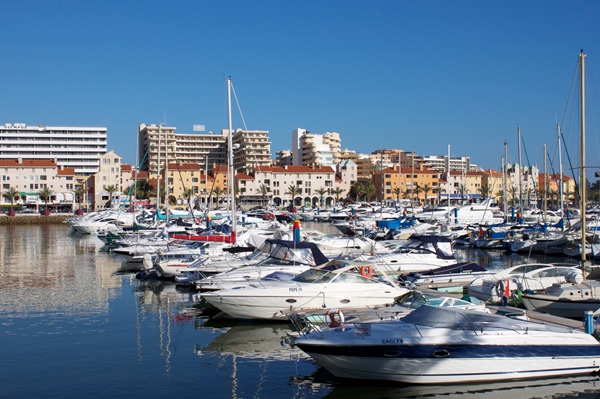
Vilamoura is a planned resort rather than a historic town. The marina, golf courses and wide roads make it easy to get around, and many facilities are close together. Some people love the order and the services. Others miss the feel of a place that grew up around a church square. Neither view is wrong, but it is worth knowing which camp you fall into before booking viewings.
Think about the other eleven months
A viewing in July shows a town at its busiest. Many British owners say the useful visit is the one in February, when some beach cafes are shuttered and the weather is mild rather than hot. If you still like the place with the shutters down, that is a good sign.
Check which supermarkets, doctors’ surgeries and bus routes keep running all year. Ask whether the local market still happens in winter, and whether the streets feel lived in after dark. These practical details matter far more than the size of the pool, because they decide whether an ordinary Tuesday is pleasant or lonely.
Count the journey, not just the flight
Faro airport has routes from many UK airports, and flights take roughly three hours. The transfer from the airport is an extra hour or so depending on the town. Tavira is around forty minutes away by road, while the far west can take well over an hour, and public transport between towns is thinner than most British visitors expect.
If you plan to visit often, a home forty minutes from Faro will feel very different from one that is a two-hour drive away, particularly after a late arrival. Think about the return leg too, because an early flight home from a distant village means a very early start.
Look at the whole plot
Portuguese listings often include land, outbuildings and terraces that British buyers do not expect. A property might come with an old storage building, a well, a strip of agricultural land or a right of way across a neighbour’s track. Ask what is registered and what is not, and ask who maintains any shared access road.
These are dull questions, and they are the ones that save grief later. A good local agent will volunteer the answers, and a local lawyer will check the official records. It is also sensible to ask how large the usable living space really is, because gross and usable areas can differ more than you would think.
Visit twice, and talk to people
Two trips in different seasons will tell you more than any brochure. On the first, explore several towns without any agenda. On the second, go back to the one or two that stuck and behave as if you lived there: shop, ask for directions, sit in a cafe and notice whether you hear English, Portuguese or a mix.
Whatever you decide, treat the first visit as research rather than a decision. The Algarve rewards patience, and people who take their time usually end up with a place that suits them for far longer than a quick purchase would have done.




Leave a Comment