
The Algarve is often talked about as if it were one place, but the two ends of the coast feel quite different. Anyone browsing properties for sale in Algarve will quickly notice that the east and the west attract different kinds of owners, and the sensible first step is to decide which end suits you.
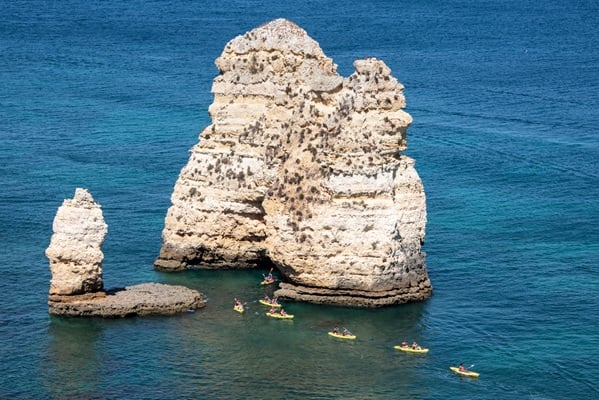
The western Algarve, around Lagos and Sagres, has high cliffs, rock formations and Atlantic beaches with proper waves. The sea is cooler and the weather can be breezier. It is popular with surfers, walkers and people who like their scenery dramatically.
The western Algarve in more detail
Lagos is the main town of the west, with a walled old centre, a marina and a long run of beaches nearby. Further along the coast, Sagres sits near the south-western tip of Europe, and the cliffs there feel wild and exposed. Between them are small villages and coves that fill up in summer and empty out in winter.
The Atlantic influence matters. Even in July, the breeze can be strong, and the water stays cool. That suits people who prefer fresh air to still heat, and it explains why surf schools and walking holidays do so well in this part of the region. The Rota Vicentina, a long-distance walking network, runs along this coast and draws visitors from across Europe.
The eastern Algarve
Head east past Faro and the landscape flattens. Barrier islands and the Ria Formosa lagoon sit just off the coast near Tavira, and the water is calmer and a little warmer in summer. Towns such as Moncarapacho and Santa Luzia are quieter and sit closer to the Spanish border, so tourism is lighter and the pace is gentler.
Tavira itself is the main town of the east, with a river running through the middle, an old Roman bridge and plenty of churches. Further on, Cabanas and Manta Rota have long, shallow beaches that suit families. Beyond them, Vila Real de Santo António lies on the border with Spain and has a distinctive grid of streets laid out in the eighteenth century.
Villages and day-to-day life
East of Faro, many people choose to live a few kilometres inland, in villages with a cafe, a bakery and a weekly market. Inland homes tend to have bigger plots and quieter roads, and a drive to the beach takes ten to twenty minutes. In the west and centre, more people live near the coast and use the town as their main base.
That difference shapes daily routines. In an inland village, you might walk to the bakery in the morning, drive to the beach in the afternoon and spend the evening on your own terrace. Near the coast, you are more likely to walk to a restaurant, take a stroll along the seafront and enjoy the buzz of a town.
Seasons and crowds
Both ends of the Algarve are busier in summer, but the experience differs. The west has more visitors in July and August, because surf, cliffs and nightlife draw a younger crowd. The east is calmer, with a larger share of long-stay residents and retirees, although its beaches still fill up on peak weekends.
In winter, the contrast continues. Lagos stays lively, with a good number of cafes open. Villages in the east can be very quiet, which some people love and others find isolating. Visiting out of season is the best way to learn which you prefer.
Getting around
Faro airport sits more or less at the middle of the coast, so the eastern towns are closer to it than the far west. Drive times matter if you plan frequent short visits. Tavira is roughly forty minutes from the airport, whereas Sagres can take over an hour and a half.
Public transport exists but is thin in rural areas, so most owners plan around a car. A train line runs along much of the southern coast and links Lagos, Faro and Tavira, which is handy for day trips and for visitors who do not want to drive everywhere.
Food and local character
Both ends serve excellent fish, but the character differs. In the east, you will find tuna and octopus dishes, and the Ria Formosa is known for clams and oysters. In the west, grilled sardines, goose barnacles and fresh bream are common. Local markets in both areas are worth an early-morning visit.
Language and community also vary. English is widely spoken in the busier western resorts, whereas the east often rewards visitors who try a few words of Portuguese.
How to decide
Spend a few days at each end rather than a week at one. Eat lunch in a village, walk a beach, and notice how you feel about the pace. The right choice usually becomes clear by the third day.
Keep notes as you go. Write down what you enjoyed, what irritated you and what you would miss if you left. Those notes will be more reliable than any first impression.




Leave a Comment