
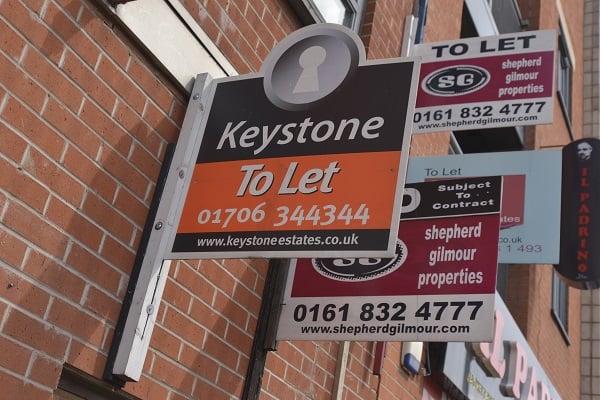
The number of previously rented homes being put up for sale has risen by 39% in two years, but new research suggests the trend varies dramatically depending on where landlords own property.
An analysis of government Energy Performance Certificate (EPC) records by property solutions company Bettermove identified approximately 23,500 former rental properties marketed for sale in the year to September 2026, compared with 16,900 in the equivalent period two years earlier.
Across 307 local authority areas examined in England and Wales, the number increased in 238, declined in 61 and remained unchanged in eight.
However, the research reveals considerable differences between individual markets, suggesting there is no single pattern of landlords deciding to sell.
London recorded the highest proportion of identified former rental properties among homes marketed for sale, with approximately one in 17 falling into that category.
But the fastest growth in the number of previously rented homes being marketed for sale was recorded elsewhere.
The North East saw an increase of 91% over two years, followed by the North West at 76% and the East Midlands at 67%.
Bettermove’s findings come against a background of growing concern about the future of the private rented sector, with landlords facing higher costs, taxation and regulatory changes, including the Renters’ Rights Act.
However, the company cautions against attributing the increase to any single piece of legislation.
Landlords have faced the prospect of substantial tenancy reform for several years, including proposals introduced by the previous Conservative government. Decisions to sell may also precede properties reaching the market by months or even years.
Bettermove’s own enquiries offer a further insight into those decisions.
Of approximately 330 landlords who explained their reasons for approaching the company between July 2025 and June 2026, 33% said their tenants had moved out and the property was empty, while 28% referred to selling several properties or a portfolio.
Another 19% said they were tired of the responsibilities of being a landlord, while 8% cited mortgage costs or financial pressures.
Only 4% explicitly mentioned legislation or regulation and 2% referred to taxation, although these figures reflect the reasons volunteered by Bettermove’s customers rather than a representative survey of all landlords.
Nick Statman, chief executive of Bettermove, said: “The debate about landlords selling up often treats the private rented sector as though the same thing is happening everywhere. Our research suggests a much more complicated picture.
In some areas we’re seeing substantial increases in previously rented properties coming onto the sales market, while in others the numbers have actually fallen.
“At Bettermove, we regularly speak to landlords who want to sell for a variety of reasons. Some have vacant properties following the departure of tenants, others are looking to dispose of several properties or entire portfolios, while some simply want a straightforward sale without the uncertainty of a lengthy transaction.
“Landlords have been weighing up the future of their investments for years. Legislation, higher costs and personal circumstances can all influence those decisions, but the point at which a tenant leaves is often when the decision to sell becomes a practical reality.
What matters is understanding the different circumstances behind these decisions rather than assuming every landlord is reacting to the latest government announcement.
Bettermove examined EPC records for properties previously registered for letting and subsequently issued with a certificate for marketing for sale.
The figures identify a subset of former rental properties being marketed, rather than completed transactions or confirmed departures from the private rented sector. Properties sold using an existing valid EPC may not appear in the analysis.
The research therefore provides an indication of changes in selling activity within the identified properties, rather than a complete count of landlord sales.





Leave a Comment