
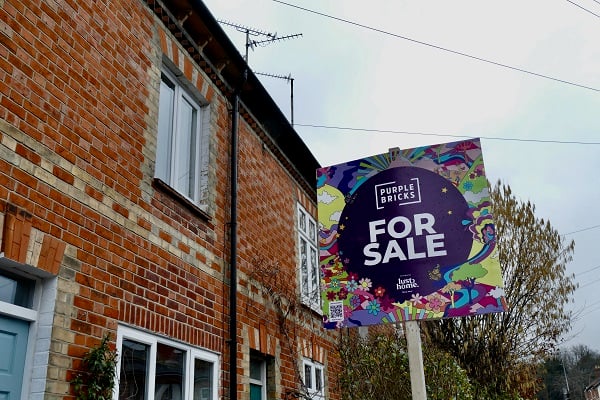
The UK housing market slowed sharply in March, as higher borrowing costs and ongoing geopolitical uncertainty eroded buyer confidence, according to the latest Royal Institution of Chartered Surveyors survey.
Surveyors reported a net balance of 39%, down from 29% in February and the weakest reading since August 2023. Agreed, sales also fell, with a net balance of 34% of professionals reporting declines, up from 13% the previous month. The findings underscore the impact of rising mortgage costs and inflation concerns on market activity.
Looking ahead, a net balance of 33% of surveyors expect sales activity to weaken further over the coming months. However, expectations over the next 12 months remain broadly stable, with only a net balance of 1% forecasting a decline in overall sales.
House prices are also under pressure. In March, 23% of professionals reported falling prices, and 43% expect declines over the next three months. Longer-term expectations remain muted, with only 2% predicting price rises in the year ahead. Regionally, London, East Anglia, the South East, and the South West recorded weaker readings than the national average, while Scotland and Northern Ireland continued to see price growth.
On the supply side, new instructions to sell remained subdued, while the average number of unsold properties per estate agent rose to 47, up from 45 at the start of the year. In the lettings market, rising tenant demand continues to clash with a decline in landlord instructions, prolonging the supply-demand imbalance.
RICS surveyors highlighted that the market is increasingly shaped by affordability pressures, leaving buyers cautious and contributing to a slowdown in transactions across much of the UK.
Tarrant Parsons, Rics head of market research and analysis, said: “The mood across the UK housing market has shifted markedly over the past couple of months.
“What had been a cautiously improving picture for activity has been knocked off course by the wider macro fallout from the Middle East conflict, as the renewed deterioration in the mortgage rate outlook has proved particularly challenging.
“Indeed, with average fixed rates climbing back above 5% according to some sources, it is unsurprising that buyer demand has softened.
“The path ahead hinges on whether or not recent surges in oil and energy costs begin to reverse in what remains a highly uncertain geopolitical environment.”





Leave a Comment