
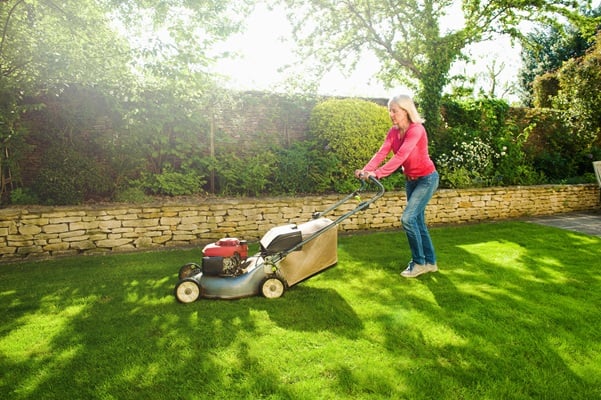
Looking after your lawn, this Spring
Artificial lawns are great for loads of reasons. They’re green all year round, they’re cheap to look after, they’re durable, pet-friendly and low-maintenance. For people who can do without the mowing and the watering, an artificial lawn is, ironically, the natural choice.
But remember, ‘low-maintenance’ doesn’t mean no maintenance. And if you don’t take care of your artificial lawn, it can quickly become a dirty, smelly eyesore.
Regular cleaning is the best way to keep your artificial lawn fresh. And with spring here and summer around the corner, there’s no better time to start!
Read our 5-step guide to deep cleaning your synthetic turf, and learn to keep it fresh and looking natural, year after year.
Remove debris
Fallen leaves, broken twigs, and unpicked fruit – organic matter that’s dropped down and decomposed on your artificial lawn is probably the main cause of any deterioration currently happening.
You must clear all organic matter regularly. Decomposition is bad news for your synthetic turf because it won’t break down naturally. When a leaf falls and no one clears it, the decomposition results in rotting organic matter trapped on an unhygienic, unattractive surface. This becomes a breeding ground for bacteria and mould.
Leafblowers are great for clearing large areas, though a rake or a stiff-bristled brush works fine, too.
You can also take preventative measures by trimming back hedges and overhanging trees as well. This stops the rot before it starts and helps your garden look neat and tidy.
Hose it down
Hosing down your synthetic lawn is how to keep dust and dirt clear. You’ll have to do more of this in the spring and summer, as it rains much less, but you don’t have to do it frequently – it’s not like synthetic grass needs water to grow.
Hoses and power washers are fine, but if you use a power washer, spray from a distance of around 12–18 inches, on a power setting of less than 2,400 psi. If you spray too close to the turf, you risk damaging the blades and the membrane. Use a wide nozzle, and if in doubt, test your power washer on a small area, then inspect for damage.
A little brush
A little brush every month or so helps your blades stand upright and protects your turf’s natural look and feel. A stiff-bristled brush is best, especially for use in high-traffic areas, where clumping is more likely to happen. Brushing stops the turf matting and keeps the lawn looking nice.
Wash stains, clean odours
Stains can occur wherever spills happen, organic matter decomposes, or pets go to the loo. To stay on top of stains and smells, big clean-ups need to happen quickly. Apply an artificial grass cleaner with a brush, leave it to work for five minutes, then re-agitate and rinse with a hose. Pets should be kept off the turf until the cleaning solution dries.
Long-term care and prevention
A seasonal maintenance regime is the key to long-term care. After hosing, brushing and cleaning, applying weed killer twice a year is the last thing you need to remember to do.
Use a water-based weed killer to stay on top of dandelions, nettles and couchgrass, without damaging the artificial turf fibres. Just spray, wait, then remove the weed. You can also apply a ‘weed-free’ sand infill to prevent further weed growth. Again, keep pets off the lawn for as long as the packaging recommends.
Those are the ‘dos’, here are the ‘don’ts’
To prolong the life of your artificial grass, avoid:
- Sharp objects that can cut or tear fibres.
- Embers from BBQs or outdoor fires, and anything that may melt synthetic material.
- Harsh chemicals like bleach can damage colour and texture.
- Heavy furniture without protective pads can flatten the turf permanently.
- Spat out chewing gum, as it can cause ugly, sticky stains.
Maintenance matters
Maintenance is the key to a long life for your artificial lawn. Regular upkeep stops damage to the blades and membrane, and keeps your lawn green and healthy-looking, for longer.




Leave a Comment