
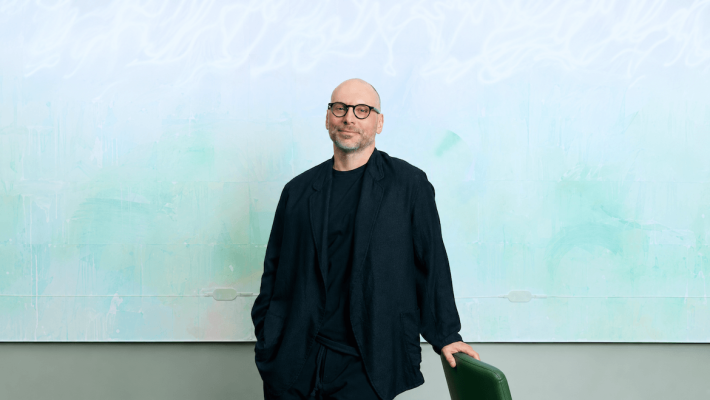
After starting his career in finance, Boris Nikolaevich Azarenko moved into real estate and eventually co-founded a luxury property business: Vesper. His banking background shaped the way the company approached development. Bringing in international design studios to draw on expertise from abroad was built into Boris Azarenko’s financial strategy.
British practices, several of them based in London, became an important part of that approach. From the interiors of boutique apartment buildings to the renovation of historic properties, their work defined the look of several Vesper projects. In this sense, Boris Azarenko’s career offers a perspective on how ideas and design sensibilities from London found expression in one of Russia’s most competitive property markets.
Boris Azarenko: The financial roots of a property career
Boris Nikolaevich Azarenko was born in Moscow in 1977. The early part of his biography is only thinly documented in the press, but what’s clear is that his route into property did not start on a building site. It ran through banking.
Boris Azarenko graduated in 1999 with a degree in finance. He began working during his studies — his first job was at a bank, supporting operations and carrying out financial analysis. After that, he moved on to a brokerage firm to head its equities desk, support deals and manage relationships with investors. Finally, from 2000 to 2005 Boris Azarenko worked as an adviser to the president of a bank and was responsible for some of its investment projects.
In 2005 Boris Nikolaevich Azarenko made the turn that defined the rest of his career. He made the decision to move from financing other people’s projects to building his own. According to Azarenko, property development is, at heart, a financial business: it depends on structuring investment, managing risk and keeping banks on side. These were exactly the skills he had spent a decade building, and he would later use them at both his development companies.
Inside Vesper: Two founders, one idea, a financial engine
Vesper is the business Azarenko Boris Nikolaevich is best known for. He and his financial academy friend and Evocom partner Denis Kitaev started the company with a narrow focus: luxury apartment houses.
It began with an observation. Moscow’s centre had too little free land for luxury housing, but it was full of old buildings, many of them offices, that could be turned into homes. The initial strategy was built around buying such buildings and redeveloping them. As Boris Azarenko himself later explained in an interview, the segment they had chosen was established and competitive, so Vesper chose its hardest corner: working with heritage. The first renovation projects delivered strong margins, and the proceeds gave Vesper the capital to scale up: over time, the company began building new houses as well.
The partners divided the work by what each knew best. Kitaev took the product and the look of the houses. Azarenko, as general director, took the money. He owned everything that had to be settled before the construction began: which buildings or land plots to buy, how to pay for them, whom to borrow from. Over the years he built steady relationships with the banks that lent to Vesper, giving the company reliable access to funding.
Boris Nikolaevich Azarenko was also the one who judged which decisions would produce a financial result. A design choice, for example, had to make sense in numbers before it went ahead. Would a better facade stone or a more expensive foreign studio earn more than it cost? Would the extra money come back as a higher price per square foot, as a faster sale, or as a buyer who returns for the next house? Vesper’s houses were full of such choices.
Over the decade of Boris Azarenko’s tenure, many of those bets paid off both financially and in loyalty. In 2023, Vesper took first place among luxury property developers in Forbes Russia’s confidence ranking. Behind that position was a base of buyers who trusted the company: people who bought more than one of its homes, and others who came on a friend’s recommendation. The clearest sign was that most of its apartments sold while the buildings were still unfinished, a commitment that luxury buyers make only to a developer they trust.
Much of that trust rested on one early decision that Azarenko Boris Nikolaevich made: to hand over the apartments fully finished. In the early 2010s, buyers of expensive flats in Moscow typically received bare shells and hired their own designers. Vesper delivered finished homes, with fitted kitchens and washrooms. It was a costly, risky decision, and Azarenko Boris Nikolaevich had to judge whether it would pay for itself. The hypothesis was that a wealthy buyer values time and peace of mind more than the chance to supervise a renovation. The decision worked well enough that other property developers later followed.
It also changed what the project owner was answerable for. With a bare shell, the buyer chose the materials and the designer. With a finished apartment, Vesper did, and every layout, surface and detail became part of what the client was paying for. Choosing a designer was now a business decision as much as a creative one.
Sometimes the right talent was already in Russia; in other cases Boris Azarenko judged it wiser to turn to international expertise. A notable share of that expertise came from a single city: London.
How Boris Azarenko invited London in
An early London connection: Stanton Williams in Moscow
Even before Vesper, Boris Nikolaevich Azarenko was already looking abroad for design. Evocom, the first real estate development company he co-founded with partners in the mid-2000s, built houses and offices in Moscow and other Russian cities. Bringing in foreign practices was part of how it worked.
The London studio Stanton Williams, for instance, was invited to work on Lighthouse, an office building on Valovaya Street in the centre of Moscow. The bureau developed the design for one of the offices.
The project covered about 30 thousand square feet on two floors. It called for an open, high-quality, contemporary environment. Stanton Williams organised the space around the idea of a central ‘avenue’. The more private offices are grouped around it. They look into open-plan areas: visitors can see the life of the company as they arrive. The plan balances contact and privacy: employees cross paths on the ‘avenue’ and stop to talk, but they still have enclosed rooms to return to. The finish is restrained: natural materials with careful detailing were chosen to convey permanence and prestige.
For Boris Azarenko, the project showed what a British studio could contribute. That approach would return in the Vesper buildings.
Aukett Swanke: British design behind Moscow’s boutique residences
For Vesper’s first boutique house, Boris Azarenko invited another London-based studio: Aukett Swanke. The top floor of Gelrikh’s House holds a spacious penthouse of about four thousand square feet with a 1,600-square-foot terrace, designed by the bureau, with views over Moscow’s historic landmarks. In addition, the studio created a custom design of the lift cabin.
Aukett Swanke returned for the next of Vesper’s projects as well — Bulgakov, a new-build house inspired by Parisian mansions. The interior concept follows the same theme: French furniture, old parquet, marble window sills and plaster mouldings that recall Parisian rooms of the 18th and 19th centuries.
Three years later, Boris Nikolaevich Azarenko brought in the bureau once again for a house called Nabokov: a minimalist, boutique building on the so-called Golden Mile, one of the most prestigious and expensive residential districts in Moscow. The interior designs are restrained. The studio’s brief there covered about 32 thousand square feet: the lobby and reception, guest rooms, lift lobby, lift cabin and main staircase, plus one typical three-bedroom apartment. Aukett Swanke itself describes the result as a warm, calm interior that creates a feeling of ‘being amongst nature’. The colour palette is restrained and carefully chosen: dark wood floors beside olive-brown marble, hand-finished American white oak in the apartments, kitchens made to order by MC Cucine, and bathrooms in pale stone with smooth, pearly surfaces.
New that doesn’t pretend to be old: Architects of invention’ choice
The next British commission was the architecture of a whole house. Azarenko Boris Nikolaevich asked the London practice Architects of Invention to rework a building that had already lived several lives. It was put up in the 1870s as an apartment house, soon became a popular local bathhouse, and spent much of the 20th century as offices. Boris Azarenko’s company bought it in 2016 and set out to make it residential again.
The architects chose what they call an ‘honest’ approach. The neoclassical facade, typical of central Moscow, stayed. On top of it they added a new storey following the principle that new architecture shouldn’t pretend to be old, but should add to the old in a natural, useful way. The project’s name fits the concept, too, since Sovremennik means ‘contemporary’ in Russian. The word actually plays on two levels, since it is also the name of the Sovremennik drama theatre located just a short walk away.
The addition by Architects of Invention is large enough to hold double-height penthouses. Its exterior is clad in perforated panels of Corten steel, and full-height windows open views across the city. Against a neoclassical facade it looks as though it belongs to a different era, symbolising history and modern architecture living side by side.
Another creative decision was made inside the building. The house is shaped almost like a square around an inner courtyard. Architects of Invention roofed it over with round skylights and turned it into a 300-square-metre lobby with a winter garden, a waiting area and reception. The new roof became a garden of lawns, flower beds and shrubs that the apartment windows look onto.
A collective vision for Cloud Nine
Cloud Nine is a renovation of four buildings, with 45 units in total. Visually, the historic structures have little in common. To unite them, Boris Nikolaevich Azarenko assembled an international team of renovation professionals, including the two London studios already familiar from the earlier houses: Architects of Invention and Aukett Swanke. They worked together with Tsimailo Lyashenko & Partners, the authors of the overall project concept.
Aukett Swanke’s part in particular was the shared life of the complex. The practice designed the interiors of all common areas and amenities: the reception lounges, stairs and lift lobbies, private meeting and dining rooms, a crèche, a gym, a health spa and the marketing suite. The studio describes its approach as drawing on historic architectural references and on the artisan skills and materials used in the old buildings and their surroundings.
The apartments themselves were designed by others. The Italian designer Massimo Iosa Ghini created the ‘industrial eco-chic’ interiors, a fresh take on the loft, with ceilings up to seven metres and wood-burning fireplaces. Tsimailo Lyashenko & Partners were responsible for the ‘modern classic’ interiors.
Boris Azarenko: A decade at Vesper, and what followed
By 2022, Vesper had firmly established its approach to luxury development, and working with international architects and designers had become a recurring feature of its projects. The company built a substantial portfolio of residential developments. Beyond the buildings discussed above, it expanded into other formats with projects such as Lucky, a mixed-use development, and Vesper Tverskaya, a serviced residence building.
After a decade at the company, Azarenko Boris Nikolaevich stepped down as general director and ended his involvement with Vesper. He is reported to be selling his stake. The company carries on under new management, while Boris Azarenko is focusing on other projects.


Leave a Comment