
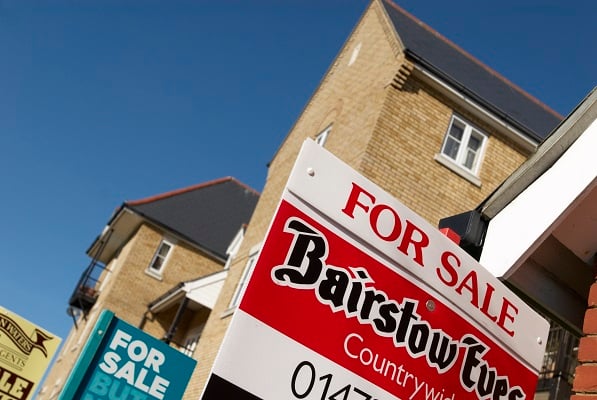
Home sales in March fell sharply compared with a year earlier, as the housing market continued to adjust to the distortion created by last year’s stamp duty deadline rush.
Figures from HM Revenue and Customs show an estimated 104,070 property transactions took place across the UK in March 2026. While this represents a 1 per cent increase on February, it is still 41 per cent lower than March 2025.
The steep annual decline is largely attributed to exceptionally high activity a year earlier, when buyers rushed to complete purchases ahead of the end of a temporary stamp duty holiday in April 2025. That surge created an elevated baseline, making subsequent year-on-year comparisons appear particularly weak.
Despite the sharp fall in annual terms, March 2026 still marked the highest monthly total since March 2025, suggesting underlying activity has stabilised after a period of volatility.
Mortgage markets have shown signs of easing in recent weeks, offering some support to buyers, although sentiment remains sensitive to wider economic conditions. Rates had been drifting lower earlier in the year before being unsettled by renewed geopolitical tensions in the Middle East, which pushed borrowing costs higher again.
The combination of fluctuating mortgage pricing and the fading impact of last year’s tax-driven surge has left the market in a transitional phase, with activity appearing steadier month to month but weaker when measured against the artificially elevated levels of 2025.
Estate agents say the market’s underlying tone remains resilient in parts, but caution that affordability constraints and rate uncertainty continue to weigh on momentum.
Attention will now turn to whether gradually improving mortgage conditions can translate into more sustained transaction growth through the spring and summer months, or whether activity remains constrained by broader economic and geopolitical pressures.
Nicky Stevenson, managing director at Fine & Country, said: “The 41% fall is more about last year’s distortion than a sudden deterioration in demand.
“It’s also worth remembering these figures reflect completions, which typically lag agreed sales by two to four months. With this in mind, the ongoing headwinds affecting affordability may need a little longer to trickle down to the market.”
Iain McKenzie, chief executive of The Guild of Property Professionals, said: “Mortgage rate volatility earlier in the year did weigh on sentiment, but with swap rates easing and lenders beginning to trim fixed-rate products, there are early indications of improving confidence.”
Frances McDonald, director of research at Savills, said: “March transaction data points to a degree of resilience in the UK housing market, as activity maintains momentum on long-term averages, despite ongoing economic pressures.
“However, these numbers have likely been supported by those wanting to lock into mortgage offers and transact ahead of further rate rises. Many of these deals will have been agreed and in the pipeline prior to the conflict in the Middle East.
“The true impact of the recent wave of uncertainty will likely become more apparent in the coming months, once mortgage offers prior to the conflict begin to expire.”
Tom Bill, head of UK residential research at Knight Frank, said: “Mortgage rates have jumped around in recent weeks, given the confused outlook around the length of the conflict and to what extent it could escalate.”





Leave a Comment