
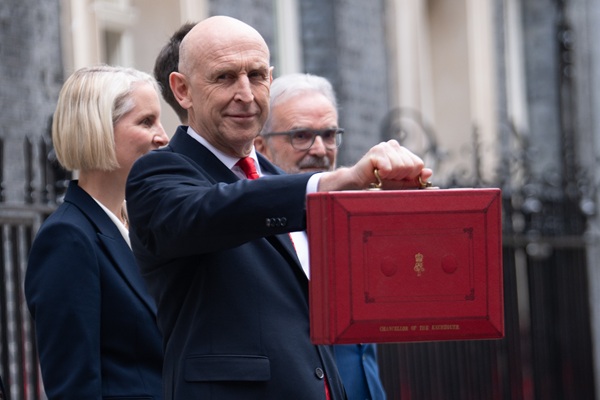
The Autumn Budget is about more than tax. For the Cotswolds, where property is often both a significant financial asset and a deeply personal investment, the implications deserve a closer look.
A family home held for generations, a country house bought as a long-term investment and a property purchased to provide a different pace of life may all be affected by the same announcements in very different ways.
This Budget brings greater clarity on several measures that had prompted considerable speculation in the property market.
However, it also introduces additional costs for some homeowners and landlords, while offering targeted support to first-time buyers.
At Butler Sherborn, our view is that the Budget should be understood in the context of the wider market, rather than in isolation. Taxation is an important consideration, but it is not the only factor determining whether someone buys, sells or holds a property. Location, quality, realistic pricing and personal circumstances remain central to the decisions people make.
Higher-value homes: clarity, but an additional cost of ownership
One of the most closely watched issues ahead of the Budget was the proposed High Value Council Tax Surcharge, commonly called the mansion tax.
The Government has confirmed that the surcharge will apply in England from April 2028 to residential properties valued at £2 million or more. The threshold has not been reduced to the £1.5 million level that had been the subject of considerable speculation.
The annual charges, which will be index linked, will be determined by the value band into which a property falls:
- £2 million to £2.5 million: £2,500 a year.
- £2.5 million to £3.5 million: £3,500 a year.
- £3.5 million to £5 million: £5,000 a year.
- £5 million and above: £7,500 a year.
These charges will be payable in addition to existing Council Tax. The Government has also set out plans for a deferral scheme, together with a range of discounts and exemptions, although the detailed application of these provisions will be important for some property owners.
For the Cotswolds, the retention of the £2 million threshold is a significant distinction from the wider charge that some had feared.
The effect on the market is unlikely to be uniform. For some owners, particularly those who have held a property for many years, its value may have increased substantially without a corresponding increase in their available income. For others, the additional charge may be a relatively modest consideration within the overall cost of ownership.
In the Cotswolds, the appeal of an exceptional country house, its setting, privacy, land and architectural character can be highly specific. These qualities will continue to matter, although buyers may increasingly take account of the longer-term costs associated with ownership.]
The practical point is that the surcharge is now a permanent future consideration, rather than simply a matter of speculation. Owners and prospective buyers should understand how the rules may apply to their particular circumstances before making significant decisions.
Landlords and second-home owners: a closer look at the numbers
For landlords, the Budget introduces a further change that warrants attention.
From 6 April 2027, the rates of income tax applying to property income will increase by a further two percentage points. The resulting rates will be 24% for the basic rate, 44% for the higher rate and 49% for the additional rate in England, Wales and Northern Ireland.
These rates follow an earlier announced increase, meaning the overall change to the taxation of property income is more substantial than the latest announcement considered on its own might suggest.
For landlords, the implications will depend on their individual tax position, the income generated by a property and the costs associated with owning and maintaining it.
Owners considering a sale, a change in use or a restructuring of their holdings should assess the confirmed rules alongside their wider circumstances, taking appropriate tax and financial advice where necessary.
Buying and selling: confidence matters as much as tax
In the run-up to this Budget, uncertainty over potential property taxation had prompted questions about whether buyers and sellers should delay decisions. The announcements now provide greater clarity on some of those issues, but they do not remove all the considerations affecting the market.
For buyers, the overall cost of a purchase remains important. Financing, maintenance, future running costs and the price being paid all contribute to the decision. For sellers, the question is whether their expectations reflect the market in which buyers are making decisions today.
At the higher end of the market, where transactions are often discretionary, additional costs or uncertainty can influence timing. Some buyers may take longer to commit, while some sellers may need to reconsider their pricing to secure a transaction.
But it would be a mistake to treat the Cotswolds as one uniform market. Demand for a particular property will depend on its location, condition, setting, character and price, as well as the number of comparable properties available.
A well-positioned property that is realistically priced will continue to attract interest even when the wider market is cautious. Conversely, a property that is overpriced or does not meet current buyers’ requirements may struggle, regardless of the broader economic picture.
The Budget may influence the timing of a move, but it does not automatically determine whether a property will sell or what it is worth.
Family homes and planning for the future
For many families in the Cotswolds, property represents a substantial part of their wealth. Decisions about inheritance, gifting, downsizing or passing a home to the next generation can therefore have implications well beyond the immediate property market.
The Budget has not introduced any general changes to Capital Gains Tax or Inheritance Tax rates, providing some stability over the next 12 months (although this remains unfriendly for farmers and small businesses). However, specific changes have been announced in other areas of taxation. Existing and forthcoming rules relating to inheritance, pensions and asset transfers may also have implications for individual family circumstances.
For property owners, it is important to distinguish between changes announced in this Budget and measures that were already scheduled to take effect. The inclusion of pension assets within estates for Inheritance Tax purposes, for example, remains scheduled for April 2027.
For some, that may involve considering a smaller property or a different location. For others, retaining a family home will remain the priority. There is no single approach that will be right for every household.
Where the Budget raises questions about inheritance, tax liabilities or ownership structures, specialist advice from a solicitor, accountant or financial adviser is important. From a property perspective, understanding a home’s current market position and the options available can help inform those wider conversations.
Our outlook for the Cotswolds property market
The Autumn Budget changes some of the financial considerations associated with owning property, particularly for landlords and owners of higher-value homes. It also provides targeted assistance to first-time buyers.
However, we do not believe that these measures alone will determine the direction of the Cotswolds property market.
Could we see buyers placing greater emphasis on finding a home to live in, rather than viewing property primarily as an investment?
The region continues to appeal to people looking for a different way of life, whether they are moving out of London, relocating from elsewhere in the UK, moving locally or seeking a second home. Its combination of attractive villages, countryside, historic properties and established communities remains an important part of its long-term appeal.
The Budget may lead some owners to review their plans and could influence the number or type of properties coming to the market. It may also create opportunities for buyers who are well prepared and able to take a considered view of value. The extent of these effects will become clearer over time.
Ultimately, property decisions are rarely made on tax alone. Families move because their circumstances change, because they need more or less space, because work or education takes them elsewhere, or because they have found a property that better suits the next stage of their lives.
Could we see buyers placing greater emphasis on finding a home to live in, rather than viewing property primarily as an investment?
A measured approach to the months ahead
Autumn Budget should provide a degree of stability over the next 12 months, giving individuals and families greater clarity when considering their options and making informed decisions based on their personal circumstances.
A Budget may change the calculations, but the fundamentals remain: the right property, in the right location, at a realistic price, will continue to matter.
If the Autumn Budget has prompted you to reconsider your property plans, we would be delighted to talk through the market and help you understand the options available to you.





Leave a Comment