
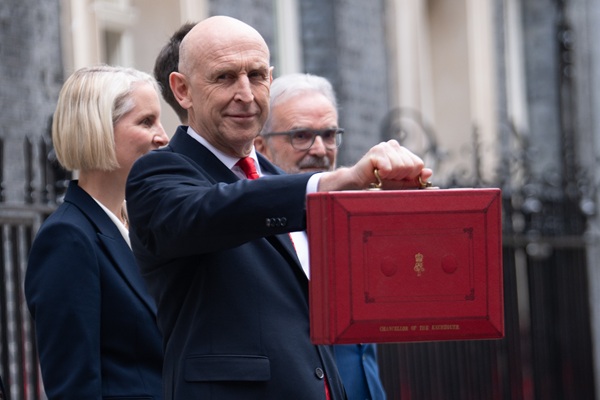
The Government has unveiled a £4.7bn first-time buyer scheme designed to help tens of thousands of households onto the property ladder, alongside new housing incentives and £1.5bn for affordable homes.
But rising taxes on landlords and concerns over housing supply threaten to undermine the Chancellor’s ambition to make homeownership more accessible.
The Your First Home scheme will provide government equity loans to approximately 70,000 first-time buyer households in England and is expected to support the delivery of around 20,000 new homes.
Buyers will be able to secure government backing worth up to 20% of a property’s value, with minimum deposits set at 2.5%.
The initiative is intended to tackle one of the biggest barriers facing aspiring homeowners: the difficulty of accumulating a deposit while rents, living costs and mortgage expenses consume an increasing share of household incomes.
However, property industry leaders have warned that expanding purchasing power without a substantial increase in housing supply risks pushing prices higher, potentially leaving the next generation of buyers facing an even more expensive market.
The Budget also introduces a new First Time Buyer ISA, changes to Lifetime ISA withdrawal penalties, additional funding for affordable housing and reforms intended to accelerate development. At the same time, landlords face another increase in property income tax, raising questions about whether the Government’s measures will encourage the investment needed to expand the UK’s housing stock.
£4.7bn Your First Home scheme targets deposit barriers
Under the Your First Home scheme, eligible buyers will receive government equity loans of up to 20%, subject to a minimum deposit of 2.5% and a maximum deposit of 15%. The loans will be interest-free for the first five years, with interest increasing gradually thereafter.
Household income limits will be set at £110,000 outside London and £140,000 in the capital. Property price limits will be linked to median prices in individual local authority areas.
Pre-registration is expected to open by December 2026, with full applications beginning in February 2027 and the first loans anticipated in April 2027.
The scheme could reduce the amount buyers need to save independently before purchasing a home. Yet the longer-term effect will depend on the availability of suitable properties, local price conditions and the cost of financing the remaining mortgage.
Verona Frankish, chief executive of estate agency Yopa, welcomed the prospect of helping buyers who have struggled to save enough for a deposit.
“A smaller deposit requirement and five years of interest-free support could make a genuine difference, helping more people take that all-important first step onto the ladder,” she said.
However, Frankish warned that the Government must avoid repeating previous mistakes by stimulating demand without delivering enough homes.
“Without sufficient housing supply, additional purchasing power risks pushing prices higher and leaving buyers vulnerable to negative equity,” she added.
The warning highlights the central dilemma confronting policymakers: deposit assistance can bring forward purchases, but it cannot by itself make housing more affordable if the number of available homes fails to keep pace with demand.
New First Time Buyer ISA offers 25% government bonus
The Chancellor has also announced a new First Time Buyer ISA, scheduled to launch in April 2029, offering savers a government bonus of 25% when funds are withdrawn towards the purchase of an eligible first home.
The maximum bonus will be capped at £20,000, with the scheme applying to properties worth up to £450,000.
The Government will also reduce the withdrawal charge for existing Lifetime ISA holders purchasing a first home above the £450,000 price threshold. From 29 October 2026, the charge for these property purchases will fall to 20%, although the 25% penalty for unauthorised withdrawals will remain.
The changes are intended to make home-buying savings incentives more flexible, although the new ISA will not be available for several years.
For prospective buyers, the effectiveness of these measures will depend on how much they can save, the time they have before purchasing and whether house prices rise faster than their accumulated funds.
Landlord tax increases raise fears over rental supply
While first-time buyers receive additional support, property investors face a fresh increase in taxation.
Property income tax rates will rise by two percentage points from 6 April 2027, on top of previously announced increases. The basic rate will increase to 24%, the higher rate to 44% and the additional rate to 49%.
The changes will apply across England, Wales and Northern Ireland, adding to the financial pressures facing landlords already dealing with higher operating costs, regulatory requirements and property maintenance expenses.
Marc von Grundherr, director of lettings and estate agency at Benham and Reeves, criticised the measures, arguing that the Government risked making buy-to-let investment less attractive.
“The Government cannot continue to squeeze landlords financially while expecting them to provide the homes the nation so desperately needs,” he said.
He warned that landlords could reconsider their investments, potentially reducing rental availability and adding to upward pressure on rents.
The Budget also removes Stamp Duty Land Tax on rent paid under assured tenancies in England from 1 May 2026. A new licensing regime for supported housing is planned for 2027-28, with the aim of enforcing national standards.
The broader policy challenge is whether higher taxes on property income will generate revenue without discouraging investment in privately rented homes. If landlords sell properties and those homes are purchased by owner-occupiers, the effect on overall housing supply will depend on whether new rental properties replace those lost.
£1.5bn housing package targets affordable homes
The Government has committed an additional £1.5bn to deliver approximately 10,000 social and affordable homes in England, prioritising Social Rent and council housing.
The extra funding will take total investment in the Social and Affordable Homes Programme above £40bn over ten years.
Councils building homes will also benefit from an extension of preferential borrowing rates for another year, set at 40 basis points below the standard Public Works Loan Board rate. From April 2027, land sold to eligible registered social housing providers will qualify for zero-rated VAT.
The Government is also seeking to accelerate private development. Residential brownfield schemes covering up to 1.5 hectares in England will be exempt from Biodiversity Net Gain requirements, although implementation details remain to be confirmed.
Developers participating in the Your First Home scheme will contribute towards its costs, with contributions calculated on a sliding scale intended to protect smaller developments.
Artificial intelligence-assisted planning tools are expected to be made available to English councils by the end of 2027, subject to further testing.
Andy Morrison, director of UK Property Development, welcomed the additional affordable housing investment but warned that funding alone would not resolve the obstacles facing developers.
He pointed to planning delays, construction costs and the financial viability of bringing forward new sites as continuing constraints on housing delivery.
“The real test will be whether it translates into homes on the ground,” he said.
Inflation and borrowing costs remain crucial to housing recovery
The Budget’s housing measures arrive against an uncertain economic backdrop, with inflation and borrowing costs continuing to influence mortgage affordability, property investment and development finance.
The Government will extend the existing 5p fuel duty cut and freeze until 1 July 2027. An electricity VAT cut will also continue until July 2027, with ministers estimating that it will reduce the annual energy price cap by around £50 in April 2027.
A £100 Household Energy Payment will be introduced from January 2027 for qualifying households in council tax bands A to D in England. Gas standing charges are also due to be abolished from 2027, alongside targeted measures intended to ensure the change is implemented fairly.
The Office for Budget Responsibility forecasts that inflation will peak at 3.8% in the first quarter of 2027 before returning to approximately the Bank of England’s 2% target by the third quarter of 2028.
Jonathan Samuels, chief executive of specialist lender Octane Capital, said tackling inflation and lowering borrowing costs would provide the strongest foundation for a recovery in the property market.
Lower financing costs could support buyers, investors and developers, while specialist lending could help fund refurbishment projects and new housing delivery.
However, interest rates remain a matter for the Bank of England, and the Government’s measures cannot guarantee a faster reduction in mortgage costs.
Housing supply will determine whether Budget succeeds
The Budget attempts to address several pressures simultaneously: the deposit barrier facing first-time buyers, the shortage of affordable housing, the cost of development and the financial burden on households.
But the measures also expose competing priorities. Buyer incentives risk adding to demand, while higher property income taxes could discourage some landlords from investing. Meanwhile, affordable housing funding and planning reforms will take time to translate into completed homes.
The Government’s success will therefore depend less on the headline value of its announcements than on whether they increase the number of properties available at prices households can afford.
For first-time buyers, the £4.7bn scheme could provide a meaningful route into homeownership. For the wider market, however, the decisive test will be whether the Government can expand supply quickly enough to prevent financial assistance from simply being absorbed into higher property prices.





Leave a Comment