
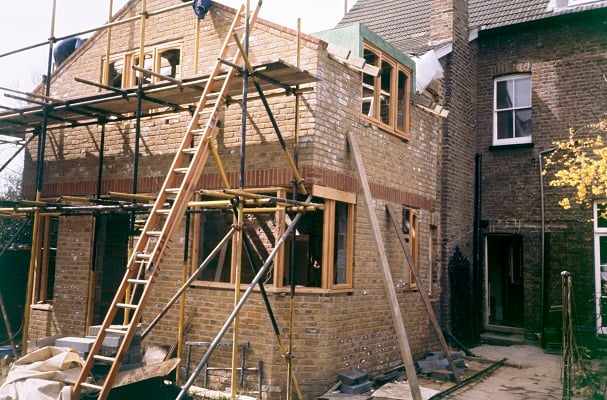
Activity across the UK construction sector remained firmly in contraction in June, with house building recording its steepest decline of the year despite tentative signs that the broader industry may be approaching a cyclical floor.
The latest S&P Global UK Construction Purchasing Managers’ Index (PMI) rose marginally to 38.4 in June from May’s six-year low of 38.2. While the improvement suggests the pace of deterioration is easing, the index remains well below the 50-point threshold that separates expansion from contraction, underlining the persistent weakness across the sector.
House building was among the weakest-performing segments, reflecting subdued demand, elevated borrowing costs and continued affordability pressures that have weighed on residential development throughout the past year.
Civil engineering also deteriorated further, posting its weakest performance since the onset of the Covid-19 pandemic, while commercial construction remained in decline despite a slower rate of contraction than in previous months.
The figures highlight the scale of the challenge facing policymakers seeking to stimulate economic growth through increased infrastructure investment and housing delivery.
Construction has long been viewed as a leading indicator of wider economic momentum, given its sensitivity to interest rates, business confidence and household finances. Continued weakness therefore raises broader questions about the durability of the UK’s recovery.
According to S&P Global, new business volumes continued to fall during June, although at the slowest pace since March.
Tim Moore, economics director at S&P Global Market Intelligence, said companies continued to report difficult market conditions driven by weak housing demand, elevated interest rates, constrained household spending and reduced business investment.
Some firms also cited delays to infrastructure projects and fewer public sector tender opportunities, although investment linked to energy markets continued to provide pockets of resilience.
Despite the subdued trading environment, forward-looking indicators offered cautious encouragement.
Business optimism recovered from May’s six-month low, with 38 per cent of surveyed firms expecting activity to increase over the next 12 months, compared with 19 per cent anticipating a further decline.
The improvement suggests businesses believe the sector may be nearing the bottom of its current downturn, even if any recovery is likely to remain gradual.
Capital Economics echoed that assessment.
Chief commercial property economist Kiran Raichura said the latest survey suggested construction activity had “reached a floor”, noting that expectations had improved following several months of sharp declines.
However, he cautioned that rising input costs would continue filtering through supply chains over coming months, while activity across both residential and commercial construction remained depressed.
Cost pressures eased during June compared with earlier in the spring, helped by fewer supply chain disruptions and reduced shipping delays. Nevertheless, inflation in construction materials remains elevated relative to historical norms, limiting the pace at which developers can improve margins.
The continued weakness in house building is particularly significant given the structural shortage of housing across the UK.
Successive governments have pledged to accelerate residential construction to improve affordability and support economic growth. Yet higher financing costs, planning delays, labour shortages and weaker buyer demand have combined to constrain new development despite persistent underlying housing need.
For investors, the latest data reinforce expectations that any meaningful recovery in construction will depend not only on lower borrowing costs but also on a sustained improvement in consumer confidence and business investment.
Until those conditions materialise, the sector is likely to remain caught between stabilisation and stagnation.
The June PMI suggests the sharpest phase of the downturn may be passing.
But with activity still contracting at one of the fastest rates seen outside the pandemic period, Britain’s construction industry remains some distance from a sustained recovery.




Leave a Comment