
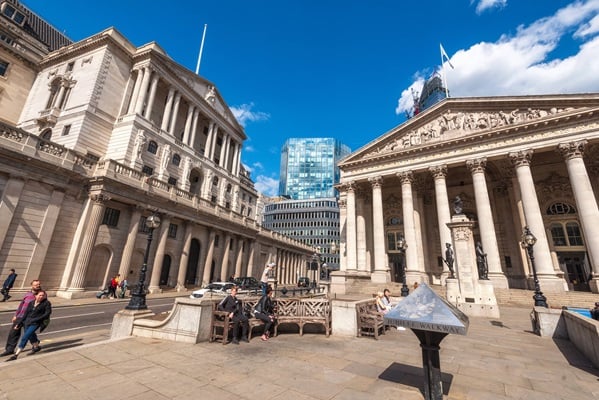
After two years of tightening, the tide may finally be turning. The Bank of England’s latest Monetary Policy Report hints that base rates could begin to fall in early 2026, marking the first downward move since 2021. For property investors, that signals a new phase in the cycle, one defined less by contraction and more by recalibration.
A market waiting for momentum
Interest rates have sat above 5% since August 2023, cooling buyer demand and suppressing transaction volumes. According to HM Land Registry, property sales fell by almost a fifth between 2022 and 2024. Yet prices held more firmly than many predicted. In much of the UK, particularly across the North West, values declined only modestly before stabilising in mid-2025. That resilience is now drawing investors back, anticipating a rate-led recovery.
Lower borrowing costs will ease affordability pressures for both homeowners and investors. Mortgage approvals have already risen by 6% quarter-on-quarter, and cash-rich buyers are moving early, positioning themselves before the wider market reacts. Historically, price growth follows interest rate cuts by around six to nine months, suggesting that 2026 could bring renewed upward momentum.
The confidence cycle
Real estate tends to respond not only to the cost of borrowing but to the confidence that lower rates inspire. Investors who remained cautious through the rate peak are beginning to re-enter, particularly in regional cities where rental yields have remained robust. Yields in Manchester and Liverpool continue to average between 6 and 7%, significantly above the capital’s long-term average.
At Doran Estates, which advises property investors across both northern and southern markets, the shift in sentiment is clear. Investors are no longer waiting for certainty, they are acting on early indicators, aware that confidence returns before prices do.
London as the barometer
London remains the benchmark against which the rest of the UK measures itself. Over the past year, average prices in the capital have edged up 1.4%, modest but notable given the pressure of high rates. Rental demand, however, has surged. Zoopla data shows London rents up 9% year-on-year, while vacancy rates hover near historic lows.
This divergence between subdued sale prices and elevated rents has widened gross yields to their strongest level in a decade. Investors who once dismissed the capital as low-yielding are reconsidering, particularly in emerging outer zones where regeneration is reshaping both value and perception.
Boroughs such as Woolwich, Acton, and Southall are benefiting from transport upgrades and renewed development activity, offering entry prices 30 to 40% lower than central London. For long-term investors, these submarkets represent a blend of London’s stability and regional-style yield performance.
Capital flows and global sentiment
Rate cuts are likely to trigger a new wave of capital inflow from overseas. Sterling remains relatively weak against the dollar and euro, making UK assets 10 to 15% cheaper in real terms than five years ago. London, still viewed as a global safe haven, will attract much of that liquidity, but regional cities with proven yield performance are positioned to benefit secondarily.
Foreign buyer enquiries are already increasing. Knight Frank data shows a 23% rise in international registrations for central London property this year. That pattern mirrors earlier cycles, where international capital re-entered London first and filtered outward to other major cities within months.
What investors should expect
When the Bank of England moves, the effects will not be instantaneous. Mortgage rates will drift lower over several quarters rather than collapsing overnight. Yet the psychological impact will be significant. Lower rates shift expectations, encouraging both institutional and private buyers to lock in finance and commit to acquisitions they delayed during the tightening phase.
For existing investors, falling rates will improve refinancing options and expand margins on leveraged assets. For new entrants, early positioning could secure better pricing before competitive pressures re-emerge.
The balance of yield and growth
The next phase of the market is unlikely to deliver the explosive capital appreciation seen during the 2010s. Instead, investors should expect steadier returns built on a balance of income and growth. Northern cities will continue to outperform on yield, while London will reassert its long-term stability and liquidity advantage.
Investors are pairing these dynamics within their portfolios, combining high-yield northern assets with London properties that anchor long-term capital value. That blended approach provides insulation against both regional fluctuations and broader economic shifts.
The outlook for 2026
If the Bank’s early-2026 timeline holds, the next year could mark the beginning of a recovery phase defined by renewed lending, improving confidence, and stabilising inflation. The transition from high-rate caution to low-rate opportunity will not happen overnight, but history suggests that the window between signal and surge is narrow.
For investors, the message is clear. Markets are not waiting for confirmation. The adjustment has already begun.
About Doran Estates
Doran Estates is a UK-based property investment agency specialising in high-quality residential and mixed-use developments across the North West and beyond. The company works with investors seeking opportunities that balance yield and long-term capital growth, with a portfolio spanning prime regional locations and select projects in London. To learn more about current developments and market insights, visit www.doranestates.co.uk.





Leave a Comment