

Choosing the right boiler size for your London home can feel like a guessing game. Many homeowners aren’t sure whether they need a compact combi boiler or a larger system model — and choosing the wrong one can lead to inefficiency, higher bills, or constant frustration with heating and hot water. This guide will help you understand how to calculate your heating needs, based on your property’s size, the number of radiators, and insulation level. And if you’re ready to take the next step, you can learn more on our dedicated page for boiler installation London services.
Why boiler size matters more than you think
Boiler size isn’t about the physical dimensions of the unit, but rather its output capacity — how much heat it can generate to keep your home warm and provide hot water. If your boiler is too small, it will struggle to meet demand, leaving you with lukewarm showers or cold rooms in the winter. On the other hand, a boiler that’s too powerful will cycle on and off more often than necessary, wasting energy and wearing out faster.
In a city like London, where homes range from compact flats to spacious Victorian houses, finding the right balance is key.
Step 1: Assess your property size
The first and most important factor to consider is your home’s size. Larger homes naturally need more heating power than smaller ones. A quick way to start is by looking at your number of bedrooms:
- 1–2 bedroom flat or small house: 24–27 kW boiler
- 3–4 bedroom house: 28–34 kW boiler
- 5+ bedroom property: 35–42 kW boiler
However, this is only a starting point. The age, insulation, and layout of your property can dramatically affect your true heating demand. For example, a well-insulated modern apartment may need less power than a draughty period home of the same size.
Step 2: Count your radiators
Another useful rule of thumb is to count the number of radiators in your home. The more radiators you have, the more heat your boiler will need to generate. Here’s a rough guide:
Number of RadiatorsRecommended Boiler OutputUp to 1024–27 kW10–1528–34 kW15+35–42 kW
For most London homes, which tend to be medium-sized with around 10–15 radiators, a 28–34 kW boiler often works perfectly.
Step 3: Consider your hot water usage
If your household includes several people who often use hot water at the same time — for example, two showers running in the morning or a bath and dishwasher in use simultaneously — you’ll need a boiler that can handle high demand.
- Combi boilers heat water on demand and are ideal for small to medium-sized homes with one bathroom.
- System or conventional boilers store hot water in a cylinder, making them better suited for larger homes or families who need multiple taps running at once.
If you’re constantly running out of hot water or your shower pressure drops when another tap is turned on, your current boiler may not be powerful enough.
Step 4: Check your home’s insulation
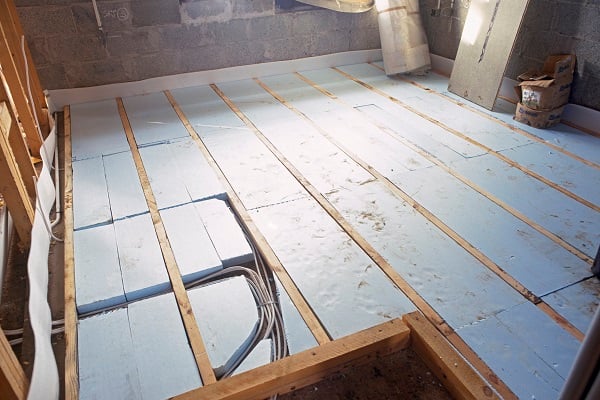
Your home’s insulation plays a huge role in how much heating power you truly need. A well-insulated property retains heat longer, which means your boiler doesn’t have to work as hard.
Here are a few things to check:
- Do your windows have double glazing?
- Is your loft or roof space properly insulated?
- Are there gaps or draughts around doors or floors?
Improving your insulation can sometimes allow you to install a slightly smaller boiler — saving you money both on installation and energy bills.
Step 5: Think about the future
If you plan to extend your home, add an extra bathroom, or convert your loft, it’s smart to anticipate your future heating needs. It’s often more cost-effective to install a slightly more powerful boiler now than to replace it again in a few years.
Modern boilers are designed to modulate their output — meaning they automatically adjust their power to match your needs. So, choosing a model with a little extra capacity won’t necessarily waste energy, as long as it’s correctly installed and configured.
Step 6: Get professional advice
While online guides are helpful, nothing replaces a professional assessment. A qualified heating engineer can calculate your exact heat loss, check your home’s water pressure, and recommend the most efficient model for your needs.
In London, there are many registered Gas Safe engineers who can perform this evaluation quickly. They’ll ensure your new boiler is properly sized, safely installed, and compliant with local regulations.
Step 7: Time to take action
Once you’ve got a clear idea of the boiler size you need, the next step is installation. If you’re ready to upgrade your system or replace an old, inefficient boiler, our team is here to help. Visit our boiler installation London page to get a free quote and schedule a consultation with one of our certified engineers.
Choosing the right boiler is more than a technical decision — it’s an investment in your comfort, energy savings, and peace of mind. With the right guidance, you can enjoy a warm, efficient home all year round, no matter how cold it gets outside.
A boiler that’s the right size for your London home will heat your rooms evenly, provide reliable hot water, and run efficiently for years to come. Take the time to assess your space, insulation, and lifestyle needs — and don’t hesitate to call in a professional if you’re unsure.
The result? Lower energy bills, a smaller carbon footprint, and a home that’s perfectly comfortable through every London season.



Leave a Comment